Google Analytics Account
- Navigate to the Google Analytics website.
- Click the name of your website after reaching the "Account Home" page.
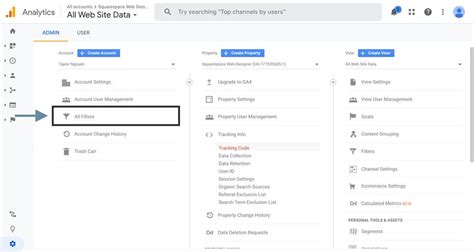
- Click the "Admin" button in the upper-right corner of the page.
- Click the "Tracking Code" tab.
- Examine the "Tracking Status" section near the bottom of the page.
The update affects users historical data on their websites. Starting May 25, 2018, the new data retention settings are being applied automatically to your Google Analytics account. The new settings will make you lose all your historical data that is more than 26 months old.
The code should be added near the top of the <head> tag and before any other script or CSS tags, and the string 'UA-XXXXX-Y' should be replaced with the property ID (also called the “tracking ID”) of the Google Analytics property you wish to track.
Find your tracking ID and tagSelect an account from the menu in the ACCOUNT column. Select a property from the menu in the PROPERTY column. Under PROPERTY, click Tracking Info > Tracking Code. Your tracking ID and property number are displayed at the top of the page.
In October of 2017, Google updated the analytics tracking code from analytics. js to gtag.
Google Analytics is a web analytics service offered by Google that tracks and reports website traffic, currently as a platform inside the Google Marketing Platform brand. Google Analytics provides an SDK that allows gathering usage data from iOS and Android app, known as Google Analytics for Mobile Apps.
The most effective way to block your spam referral traffic is through a . htaccess (hypertext access) file. This configuration file is used to control your server. It can be instructed to block spammy visits by domain or IP address.
Referral traffic describes the people who come to your domain from other sites, without searching for you on Google. When someone visits a link from a social network or website and they end up on another site, tracking systems from Google recognize the visitor as a referral.
Block Fraudulent Traffic with these Free Tools
- Google AdWords' IP Exclusion Tool.
- Post Trackbacks.
- Akismet Spam Manager.
- Google Analytics Referrer Spam Removal.
- Cloudflare.
- Incapsula.
- Wordfence Security Plugin for WordPress.
- htaccess File Block.
Sign in to your Google Analytics account and select the website for which you'd like to see traffic referrals. To view the traffic referrals, navigate to Acquisition » All Traffic » Referrals. You'll now see a table that shows referral traffic sources to your site.
Social traffic refers to traffic coming to your website, mobile site or mobile app from social networks and social media platforms. For example, a person who clicks on a tweet or a Facebook post and then arrives on your brand's website will be counted in your digital analytics reports as social traffic.
A referral exclusion list is the list of domains whose incoming traffic is treated as direct traffic (instead of referral traffic) by Google Analytics. Direct traffic is a Google Analytics session (or visit) which starts without a referrer being passed by a user's web browser.
Paid search is a form of digital marketing where search engines such as Google and Bing allow advertisers to show ads on their search engine results pages (SERPs). Paid search works on a pay-per-click model, meaning you do exactly that – until someone clicks on your ad, you don't pay.
About bounce rateBounce rate is single-page sessions divided by all sessions, or the percentage of all sessions on your site in which users viewed only a single page and triggered only a single request to the Analytics server.
In short, Google Analytics will report a traffic source of "direct" when it has no data on how the session arrived at your website, or when the referring source has been configured to be ignored.
According to its name, unique visitors are people who visit your website or blog for the first time. Analytical tools such as Google Analytics, Bing Analytics, Yandesk and other tracking tool uses visitor's IP address, Browser Cookies, Registration ID and Use Agent to identify a unique visitor.
“Unique visitors” refers to the actual number of people (well, sort of, more on that in a bit) who have come to your website or webpage at least once during a reporting period — this number does not increase if a previous visitor returns to a page multiple times.
Google Analytics is the most popular tool for understanding how people are finding and using your site. In addition to its standard reports, you can use its User ID feature to get more fine-grained reporting about registered users.
A 'new user' is a visitor who, according to Google's tracking snippet, has never been to your site before and is initiating their first session on your site. Google's tracking snippet, which detects browser cookies, will identify a 'returning user' if a cookie is present, and a 'new user' if a cookie is not present.
The official Google Analytics definition of this Web metric is: “Unique Visitors is the number of unduplicated (counted only once) visitors to your website over the course of a specified time period.” The new user definition is: “Users that have had at least one session within the selected date range.
New User: The session-level status of a user who has never visited the site before. You can appear as a new user twice over the course of two sessions. New Visitor: The user-level status of a user who has never visited the site before.
Visits - the number of single browsing sessions by individual visitors to your site. Pageviews - how many actual page requests your site received. Unique Visitors - an estimate of the total number of visitors that reached your site.
Google Analytics uses a metric called active users which refers to real-time users when used in the context of real-time reports. Through the Active Users report, you can determine the number of users who visited your website in the last 1, 7, 14 or 30 days in the selected time period.
Google Analytics has quietly changed the terminology they use within the reports to change what they call "visits" and "unique visitors." Now, visits is named "sessions" and unique visitors is named "users." And, Visits are now referred to as Sessions everywhere in all of Google Analytics.