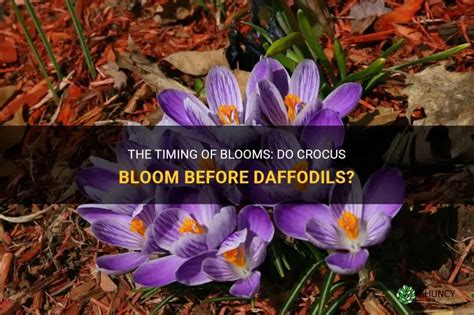
Other bulbs that bloom beautifully next to daffodils include: Tulips. Muscari. Crocus.
when to plant crocusesPlant the corms September–November for an early spring display. You can plant autumn-flowering crocuses and colchicums in late summer for autumn and early winter colour.
Tulips, Daffodils, Fritillaria and all other spring flowering bulbs can be planted throughout September, October and November. Many types will perform perfectly well, even if planted well in to December but the trick is to get them in before the risk of frost, so that they can start producing roots.
Tulips. The variation of tulips (Tulipa) is such that there are varieties to suit the punchiest planting schemes out there, as well as the most elegant. Happy in pots, beds and borders, most will be coming into bloom in April, plus they look marvellous in cut flower displays.
Growing from bulb-like structures called corms, crocuses are low-growing perennial plants from the iris (Iridaceae) family. In many regions, crocus flowers (Crocus spp.) mark the arrival of spring. While crocuses are often considered bulbs, strictly speaking they are corms, as are gladiolas.
While May is the last month to enjoy tulips and dog's tooth violets, nectaroscordum, camassia and bearded irises can be relied upon to amp up the spring-summer colour, with plenty of vivid shades to choose from.
Crocus will bloom early and add an extra two weeks to the show. Nestle a few crocus bulbs near the edge of a walkway, pathway or steps and enjoy their delicate blossoms every spring for years to come.
Crocus. In warm, sunny parts of the garden and in containers, crocus can bulk up over two to three years. You can then lift and divide the corms up to six weeks after flowering has finished. Replant them immediately in a position in full sun or part shade.
Most bulbs, if stored correctly, can be kept for about 12 months before needing to be planted. The longevity of flowering bulbs is largely determined by the adequacy of the storage provided.
They are busy producing roots and need to uptake moisture to store in the corm. Soil is a crucial factor in non-flowering crocus corms. Soil has to be loose enough that the spring shoots can easily poke through. The plants need sun to form flowers, so ensure the corms are planted where it is bright.
A bulb that comes back every year, often with more blooms than before, is called a perennial. Great examples are daffodils and crocuses. Bulbs that only grown for one season are called annuals, which means that you have to plant new bulbs every year to get the same effect.
Crocuses generally bloom in late March or early April, depending on the gardening zone. Planted under a lawn, these flowers will provide bright spots of color as spring arrives. These flowers also naturalize well and do well in rock gardens and along paths. Crocus bulbs must be planted 3-4" deep in the fall.
Crocus flowers have a rich symbolism of rebirth, innocence, joy, and new-beginnings thanks to their early blooming flowers in spring.
The word crocus usually conjures images of cheerful small flowers emerging from snow and ice as the first harbinger of spring. But there are a few species of the genus Crocus, part of the iris family (Iridaceae), that bloom in the fall and other fall-blooming bulbs that have the word crocus in their common name.
You can prevent this happening by simply removing the flowers as they start to fade, thereby preventing the formation of seedpods. This technique is known as deadheading. By removing blooms as they fade, deadheading also improves the current display.
Daffodils and crocus are all classed as spring bulbs even though crocus is technically a corm not a bulb. The difference is like the difference between a head of garlic and an onion. Each little pea shaped cormel stays attached to the main corm while it matures and grows.
1. Narcissus 'Rijnveld's. Early Sensation' is recognised as one of the earliest daffodils to flower; in many areas it is often in bloom for Christmas. It is a classic yellow-flowered variety of normal daffodil stature.
How many years do daffodil bulbs last? Daffodil bulbs can last up to 12 months before they need to be planted as long as they're stored correctly.
12 Top Performing Spring Bulbs that Come Back Year After Year
- Scilla siberica (Siberian Squill)
- Tulipa 'Orange Emperor' (Fosteriana Tulip)
- Tulipa 'Spring Green' (Viridiflora Tulip)
- Tulipa Clusiana 'Lady Jane' (Botanical Tulip)
- Tulipa tarda (Botanical Tulip)
- Anemone blanda (Grecian Windflower)
Deadheading is the removal of spent flowers. While tulips should be deadheaded immediately after flowering, it is not necessary to deadhead daffodils. Some gardeners do deadhead daffodils for aesthetic reasons as the spent flowers/seed pods are not attractive.
This can be done after the foliage turns yellow and dies down in late spring. New bulbs: Sometimes bulbs don't bloom the first year. This is normal and doesn't indicate any particular problem.
If properly pollinated, daffodils will grow seeds in the seed pods behind their petals, which can be replanted to grow into the beautiful flowers we know and love. Still attached to the same main bulb they came from, these new bulbs will not conventionally spread throughout the garden as other spreading flowers might.
Daffodils (Narcissus spp.) and tulips (Tulipa spp.) are often the first seasonal flowers of spring. Planting tulips and daffodils together in a single bed creates a colorful spring display and can increase the flowering period if you mix early-flowering daffodils with midseason or late-blooming tulips.
When growing daffodils, you should plant them in groups of ten or more. All you do is make a loose circle with about seven bulbs and put three in the middle. For aesthetic reasons, you don't want to mix different cultivars within each planting group.
But flowers that close up at night, such as tulips, hibiscus, poppies and crocuses, aren't sleepy. They're just highly evolved. Plants that tuck themselves in for bedtime exhibit a natural behavior known as nyctinasty. Charles Darwin believed that plants close up at night to reduce their risk of freezing.
Crocus plants require a chilling period of 6 to 8 weeks before sprouting time. The corms are quite cold hardy but in soil that drains poorly, leaving them in the ground can cause rot. If you purchase your crocus too early in the season for planting, you can save them until planting time.