Java is a programming language that produces software for multiple platforms. When a programmer writes a Java application, the compiled code (known as bytecode) runs on most operating systems (OS), including Windows, Linux and Mac OS. Java derives much of its syntax from the C and C++ programming languages.
In computer networking, localhost is a hostname that means this computer. It is used to access the network services that are running on the host via the loopback network interface. Using the loopback interface bypasses any local network interface hardware.
In java, there is no default port number ,you have to specify the port number. but port number from 1 to 1023 are for root user only and Port number from 1024 to 65535 are non root user port. you can directly use port numbers from 1024 to 65535 if they are available.
Introduction to the Java HTTP Client. The HTTP Client was added in Java 11. It can be used to request HTTP resources over the network. It supports HTTP/1.1 and HTTP/2, both synchronous and asynchronous programming models, handles request and response bodies as reactive-streams, and follows the familiar builder pattern.
Java DataInputStream class allows an application to read primitive data from the input stream in a machine-independent way. Java application generally uses the data output stream to write data that can later be read by a data input stream.
Java Networking is a concept of connecting two or more computing devices together so that we can share resources. Java socket programming provides facility to share data between different computing devices.
The Java.io.DataInputStream class lets an application read primitive Java data types from an underlying input stream in a machine-independent way.Following are the important points about DataInputStream − An application uses a data output stream to write data that can later be read by a data input stream.
Why use BufferedReader and BufferedWriter Classses in Java. BufferedReader is a class in Java that reads text from a character-input stream, buffering characters so as to provide for the efficient reading of characters, lines and arrays. The buffer size may be specified.
Most of the software stack that Google uses on their servers was developed in-house. The software that runs the Google infrastructure includes: Google Web Server (GWS) – custom Linux-based Web server that Google uses for its online services.
This list categorizes the many different types of servers used in the marketplace today.
- Proxy Server.
- Mail Server.
- Server Platforms.
- Web Server.
- Application Server.
- Real-Time Communication Server.
- FTP Server.
- Collaboration Server.
Server may also refer to a physical computer which is strongly dedicated to the purpose of running one or many such services in order to serve the various needs of the programs that are running on the same system network as well as other systems.
Server racks are measured in terms of rack units, usually written as "RU" or simply "U." One rack unit equals 1.75 inches (44.45mm) in high, with compliant equipment measured in multiples of "U." Network switches are generally 1U to 2U, servers can range from 1U to 4U and blade servers can be anywhere from 5U to 10U or
In computing, a server is a computer program or a device that provides functionality for other programs or devices, called "clients". Typical servers are database servers, file servers, mail servers, print servers, web servers, game servers, and application servers.
The average cost to rent a small business server is $100 to $200/month. For purchasing a server, it may cost between $1000-$3000 for a small business. The cost of a small business server will depend on how much CPU, bandwidth, disk space, and memory is required. There are other considerations, as well.
A name server translates domain names into IP addresses. For example, when you type in "" the request gets sent to Microsoft's name server which returns the IP address of the Microsoft website. Each domain name must have at least two name servers listed when the domain is registered.
An internal server error is an error on the web server you're trying to access. That server is misconfigured in some way that prevents it from responding properly to what you're asking it to do.
So now we have established what an Application server is, we will now take a look at the available Java Application Servers.
- Glassfish.
- JBoss Enterprise Application Platform.
- Wildfly.
- Apache Tomcat.
- Apache TomEE.
- JOnAS.
- Resin Servlet Container (Open Source)
- Blazix.
A proxy server is a computer system or router that functions as a relay between client and server. It helps prevent an attacker from invading a private network and is one of several tools used to build a firewall. The word proxy means "to act on behalf of another," and a proxy server acts on behalf of the user.
A web server processes incoming network requests over HTTP and several other related protocols. The primary function of a web server is to store, process and deliver web pages to clients. The communication between client and server takes place using the Hypertext Transfer Protocol (HTTP).
Apache is an open-source and free web server software that powers around 46% of websites around the world. The official name is Apache HTTP Server, and it's maintained and developed by the Apache Software Foundation.
Gunicorn. Gunicorn is a stand-alone WSGI web application server which offers a lot of functionality. It natively supports various frameworks with its adapters, making it an extremely easy to use drop-in replacement for many development servers that are used during development.
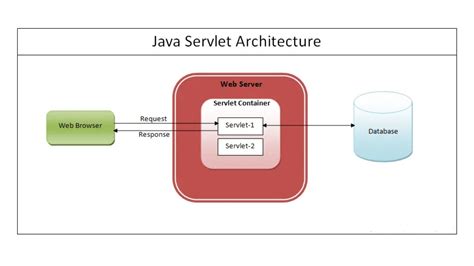
For example, Tomcat is an Application server for Java Web Applications, which contain additional functionalities like Servlet Container, which is known as Catalina, to process and manage the servlets. JBoss, Glassfish, Tomcat, etc. are some of the examples of Application servers for Java Web Applications.
JBoss Web Server is an enterprise ready web server designed for medium and large applications, based on Tomcat. JBoss Web Server provides organizations with a single deployment platform for Java Server Pages (JSP) and Java Servlet technologies, PHP, and CGI.
HTTP. (HyperText Transfer Protocol) The communications protocol used to connect to Web servers on the Internet or on a local network (intranet). Its primary function is to establish a connection with the server and send HTML pages back to the user's browser.
There are 4 primary web servers:
- Apache (provided by Apache)
- IIS (provided by Microsoft)
- nginx (provided by NGINX, Inc. and pronounced like “Engine X”)
- and GWS (provided by Google and short for Google Web Server)
An application server works with a web server to handle requests for dynamic content, such as servlets, from web applications. The client request can consist of servlets, JavaServer Pages (JSP) files, and enterprise beans, and their supporting classes.
Application servers provide many advantages. They provide data and code integrity by allowing for a more centralized approach to updates and upgrades to applications. They provide security by centralizing the management of data access and the authentication process.
A framework, or software framework, is a platform for developing software applications. It provides a foundation on which software developers can build programs for a specific platform. A framework may also include code libraries, a compiler, and other programs used in the software development process.
WebLogic Server is an application server: a platform for developing and deploying multitier distributed enterprise applications. WebLogic Server centralizes application services such as Web server functionality, business components, and access to backend enterprise systems.
GlassFish is an Application Server which can also be used as a Web Server (Http Server). A web Server means: Handling HTTP requests (usually from browsers). A Servlet Container (e.g. Tomcat) means: It can handle servlets & JSP.
Tomcat is a web server and a Servlet/JavaServer Pages container. It is often used as an application server for strictly web-based applications but does not include the entire suite of capabilities that a Java EE application server would supply.
Simply put, an app is a type of software that allows you to perform specific tasks. Applications for desktop or laptop computers are sometimes called desktop applications, while those for mobile devices are called mobile apps. When you open an application, it runs inside the operating system until you close it.
Internet Information Services (IIS) is a flexible, general-purpose web server from Microsoft that runs on Windows systems to serve requested HTML pages or files. An IIS web server accepts requests from remote client computers and returns the appropriate response.